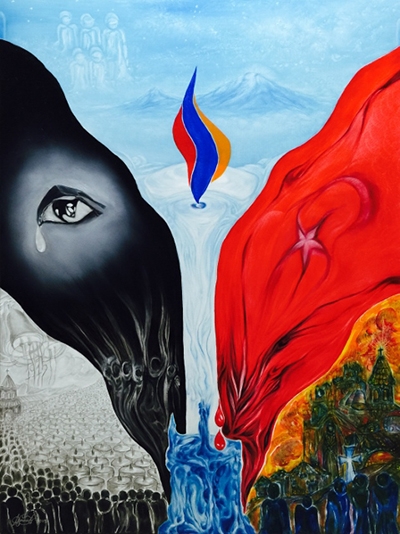
CULTURAL GENOCIDE
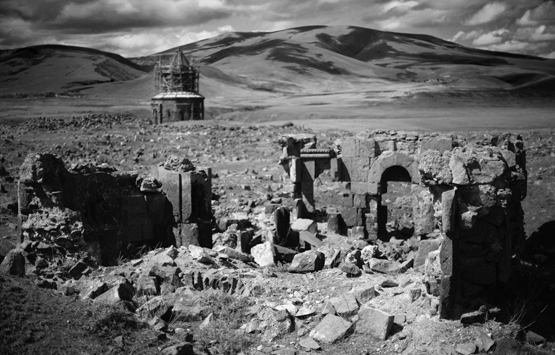
Acts and measures undertaken to destroy the culture of a nation or an ethnic group is called "cultural genocide". Many facts prove that simultaneous with the massacres and deportation of Armenians in the Ottoman Empire, the government of the Young Turks masterminded and implemented systematic destruction of the material testimonies of the Armenian civilization.
THE ARMENIAN GENOCIDE
A genocide is the organized extermination of a nation aiming to put an end to their collective existence. The extermination of Armenians in the Ottoman Empire and the surrounding regions during 1915-1923 is called the Armenian Genocide. Those massacres were masterminded and perpetrated by the government of Young Turks and were later finalized by the Kemalist government.
view more
The anguish of the Armenian Genocide, which is being reborn with every Armenian, has its own reflection in the Armenian fine arts. Many Armenian well known artists have created artworks both in Armenia and in Diaspora that are the speaking witness of the Armenian great pain, loss and yearning. These artworks are also ode to the Armenian viable genes, will power of giving birth, living and creation. Genocide is the type of crime that does have any expiration date. Human speech is sometimes powerless in expressing those things that are possible to express only through art. These 100 artworks will continuously tell the world about the unhealed wound of the Armenian, millions of innocent victims, demolished heartlands, bowed churches, lost homeland and infinite belief. The power of art is undeniable and artworks are eternal.
Artist:
Edward Arzrunian
Title:
The Refugees in Etjmiatsin, 1968
Location:
National Gallery of Armenian, Yerevan
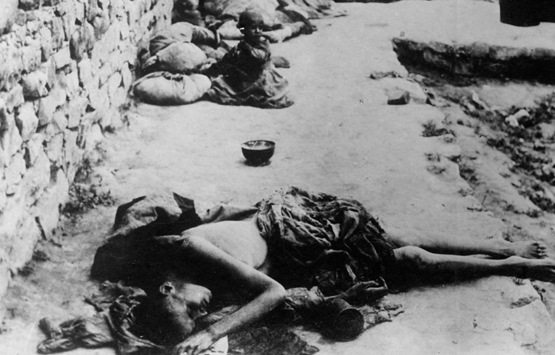
Artist: Edward Arzrunian
Title: The Refugees in Etjmiatsin, 1968
Location: National Gallery of Armenian, Yerevan
In Soviet Armenia there was a silence about the Armenian Genocide. The authorities of USSR had an agreement with Turkey of not mentioning the Armenian Genocide in Armenia. It was prohibited for the Armenian artists to cover the theme of Genocide in their canvases till the 60-ies. And only in 1965 when the Genocide Memorial monument was built in the memory of the victims of the Armenian Genocide, the ban wall seemed to have vanished. Armenian artists started to create works depicting the historic truth.
This work of Eduard Arzunian is one of those historic facts showing how the Armenian mother, who has escaped from exile, starvation, calamity of death, together with her children and other orphaned children would gather at the church begging for God’s shelter.
Artist:
Paravon Mirzoyan
Title:
1915 Armenian Landscape, 2011
Location:
Artist's Collection
Artist: Paravon Mirzoyan
Title: 1915 Armenian Landscape, 2011
Location: Artist's Collection
Decorative wholeness and the rhythmic balance of the painting “work” for the length of contemplation. The width of panorama, dynamism of the painting’s platitude helps raise above yourself and the reality. There is a sense of length of the space in depth through the contrast of the multi-scaled color platitudes. The mountain, as a penetrating symbol - is a witness of the Armenian Genocide in 1915 - very similar to the motive of flood: it reaches to the almost universal scale. And this is the aesthetic viewpoint of the artist.
Artist:
Jansem (Hovhannes Semerdjian)
Title:
Funeral of My Grandfather, 1951
Location:
Modern Art Museum of Yerevan
Artist: Jansem (Hovhannes Semerdjian)
Title: Funeral of My Grandfather, 1951
Location: Modern Art Museum of Yerevan
Shahen Khachatryan (Art critic): "The sensitive lines of Jansem are flowing in the canvases like blood vessels and harmonizing the subtle, pale color palette, they create hyperrealistic, visual and music atmosphere. Jansem practices this principle of building the image. Exactly 50 years after the Genocide inspired "Funeral of my grandfather" painting, the master creates the "Genocide" series revealing the curtain of the history truth.
Artist:
Aram Isabekyan
Title:
Feast of the Hyenas, 1989
Location:
Artist's Collection
Artist: Aram Isabekyan
Title: Feast of the Hyenas, 1989
Location: Artist's Collection
Aram Isabekyan: "Whatever happened to the Armenian nation in 1915, where the Ottoman Turkey massacred a million and a half innocent Armenians in the Western Armenia, whatever happened in 1988 Where Soviet Azerbaijan implemented planned massacres of the Armenian nation from Sumgait city, massacres, forced displacement, looting, rape, murder… This all can never be left unexpressed in the canvases of the Armenian artists. It will be passed from generation to generation."
view more
share your arts
Here, you can upload your artwork dedicated to the Armenian Genocide. The uploaded artwork will be published in the
SHARED ARTS section.
Note: the site carries no responsibility over the copyright genuinity issues in the SHARED ARTS section. But still if you come across possible violation of copyrights, please, do not hesitate to contact us via info@100years100arts.am email address.
Artist: Adriana Angolian
Live Memory, 1994
Artist: Adriana Angolian
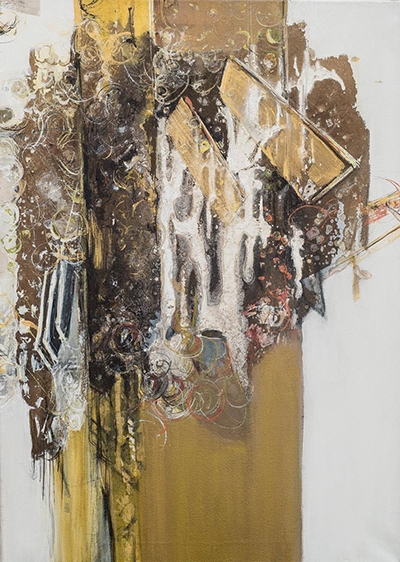
Gold Universe, 2016
Artist:
Khoren Der Harootian
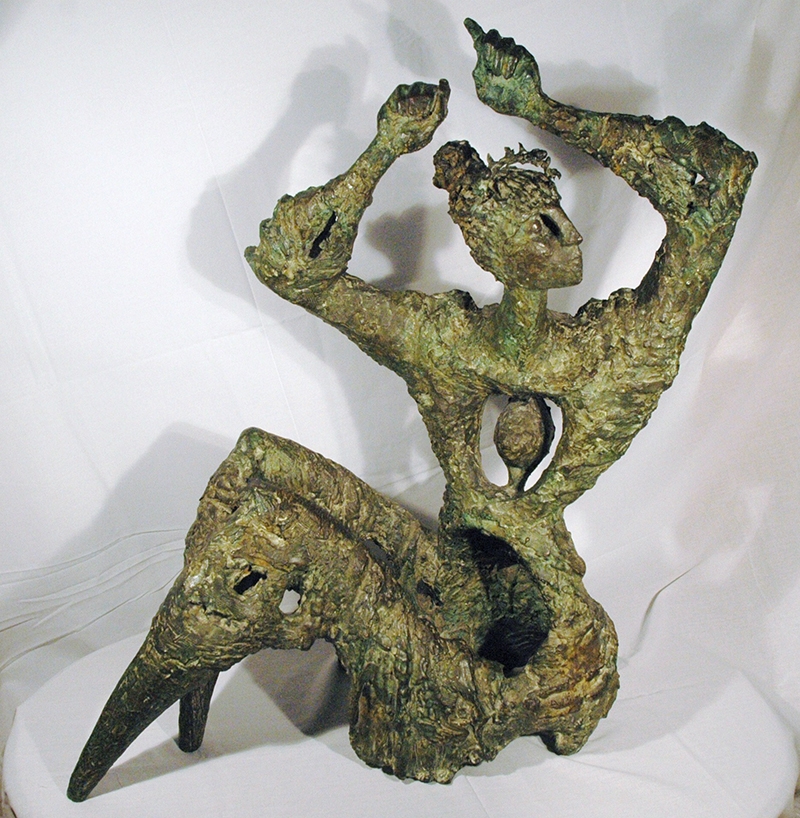
Artist: Khoren Der Harootian
Ani (bronze), 1963
Artist:
Alexander Sadoyan
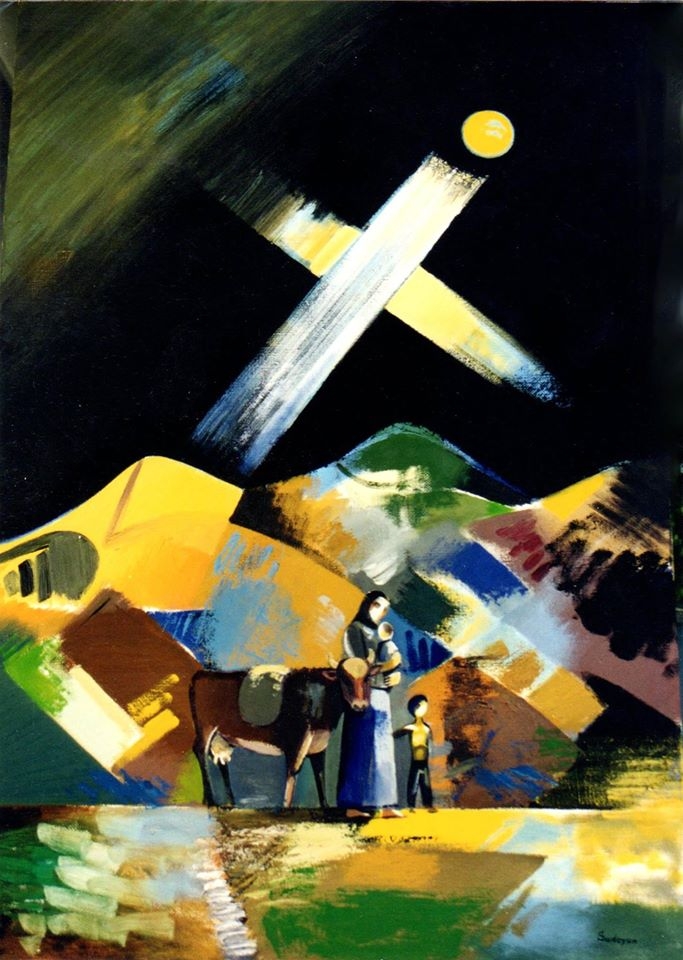
Artist: Alexander Sadoyan
Immigration
Artist:
Alexander Sadoyan
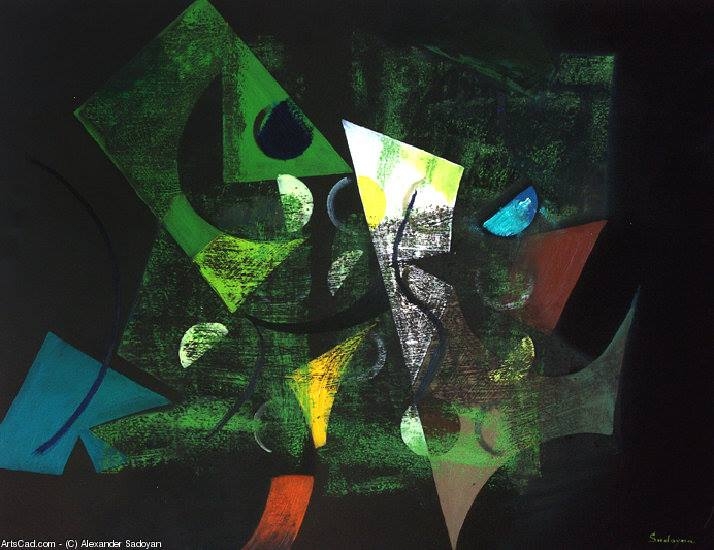
Artist: Alexander Sadoyan
Untitled
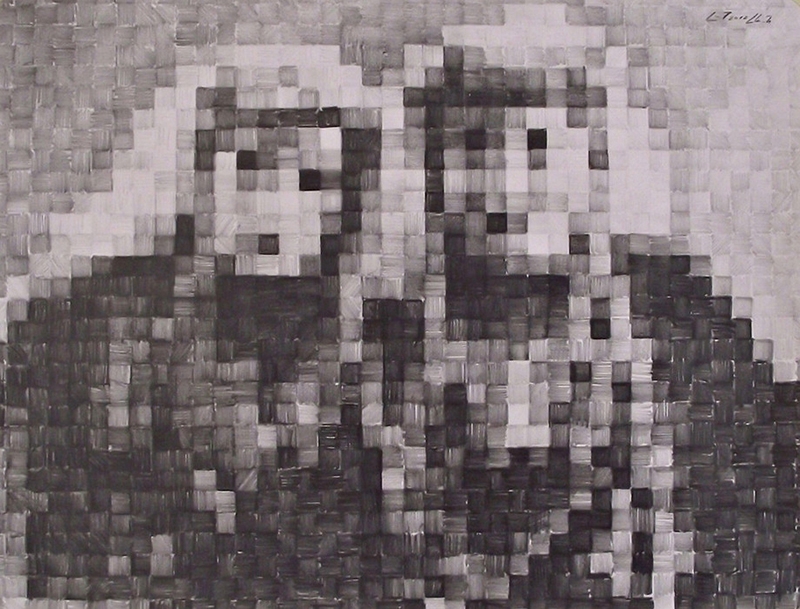
Artist: Levon Fljyan
Our Ancestors-2 (from Pixel 2 project), 2012
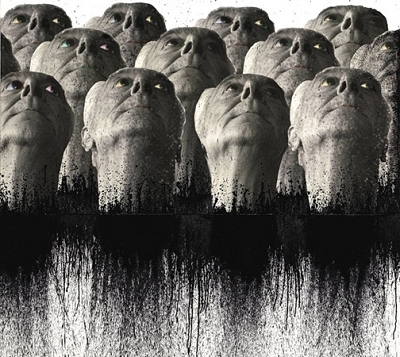
Artist: Kaloust Guedel
All Men are Created Alike, 2003
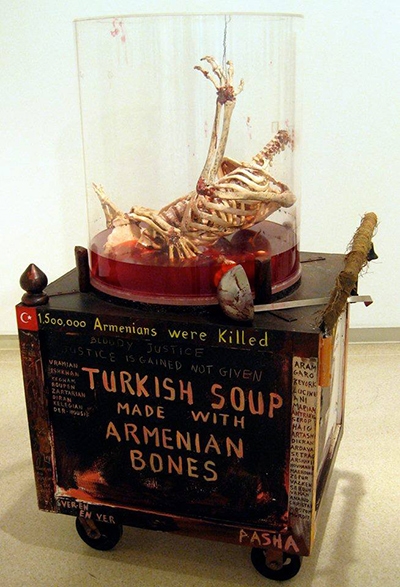
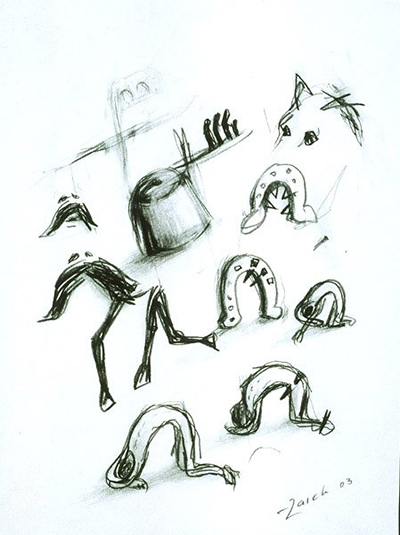
Artist: Zareh
Turkish Soup Made with Armenian Bones, 1998
Artist: Arthur Lazaryan
Never Again
view more